
Technology revolutionises use of old car tyres
Polymer Injection Technology uses old car tyres to make steel, thereby reducing reliance on coal.
Read MoreAfter successful completion of two industrial research projects, Molycop is now funding two comprehensive research projects at The University of Queensland in Brisbane, Australia, to further advance the company’s new product development (NPD) capabilities.
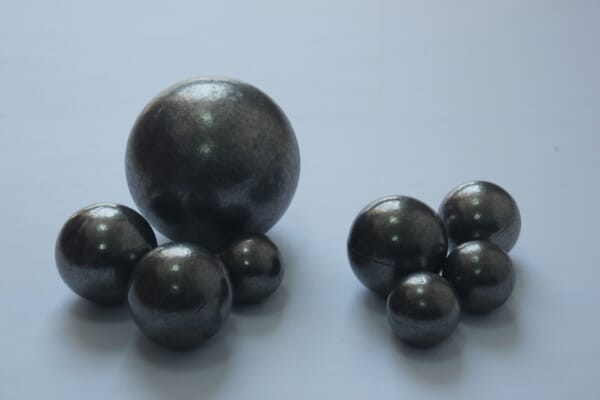
Molycop has invested in two projects at The University of Queensland (UQ). One aims to design a new testing methodology to evaluate the performance of grinding balls under fracture-related service scenarios. The second project is designed to optimise the heat treatment regimes for three main high chromium (HiCr) grades supplied by Molycop.
Molycop's partnership with UQ is evidence of its collaboration with major universities at the forefront of mining-related research fields. Direct support of research funding, such as for these two UQ projects, reveals Molycop's commitment to advanced research across all facets of the mining industry.
The main objective of this project is to optimise the heat treatment cycles of HiCr grinding balls. Unlike any previous similar research, this project aims to optimise the service performance of the balls, not an approximation of the performance, such as bulk hardness, etc. With its detailed experimental plan, this project will provide deep insights into the effects of heat treatment on the performance, properties and microstructural features of Molycop HiCr products.
What problems are being solved?
Grinding balls are consumed by several damage mechanisms under their service conditions. Most of the research works focused on the abrasive wear (or abrasion) as the main and/or only consumption mechanism.
This innovative exploratory PhD research project focuses on meso- and macro-scale fracture damages in grinding balls. These testing methodologies will be developed for Molycop’s BMAT machine and will be correlated with industrially accepted grinding media test such as DBT (drop ball tower).
The project is due to complete in December 2027.
What problems are being solved?